Need assistance?
Need Assistance? Call Us 0330 058 0630
16/07/2026 • by Alice P
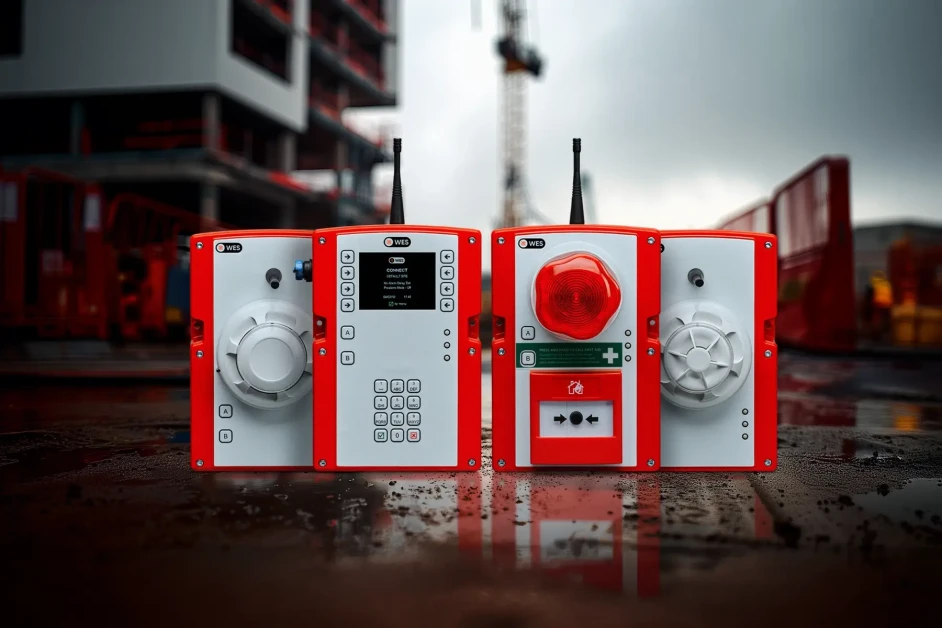
Construction sites change throughout the life of a project, especially if it's quite an extensive project.
Walls are added, access routes move, temporary buildings are relocated and different trades begin working in new areas. This can make a permanently wired fire alarm system difficult to install during the early and intermediate stages of construction.
WES3 systems provide a wireless option for temporary construction site fire alarms. Devices can be positioned around the site and moved as the project develops, helping contractors maintain suitable alarm coverage without installing extensive temporary cabling.
This guide explains:
How WES3 systems work
The WES3 product range
What to consider when purchasing a WES3 system
WES3 is a wireless fire alarm and evacuation system designed for temporary and changing environments such as construction sites.
The system uses linked wireless devices positioned around the site. When a fire alarm is activated from a call point or automatic detector, the alarm can be communicated across the WES3 network.
This allows workers in different areas to receive a site-wide warning rather than relying on someone shouting, using an air horn or travelling through the site to raise the alarm manually.
Because the devices operate wirelessly, the system can be installed without running fire alarm cables between every location. Units can also be repositioned as work progresses, subject to system planning, testing and maintaining suitable radio communication.
A WES3 system can include manual call points, automatic smoke and heat detection, sounders, visual warning devices and system monitoring equipment.
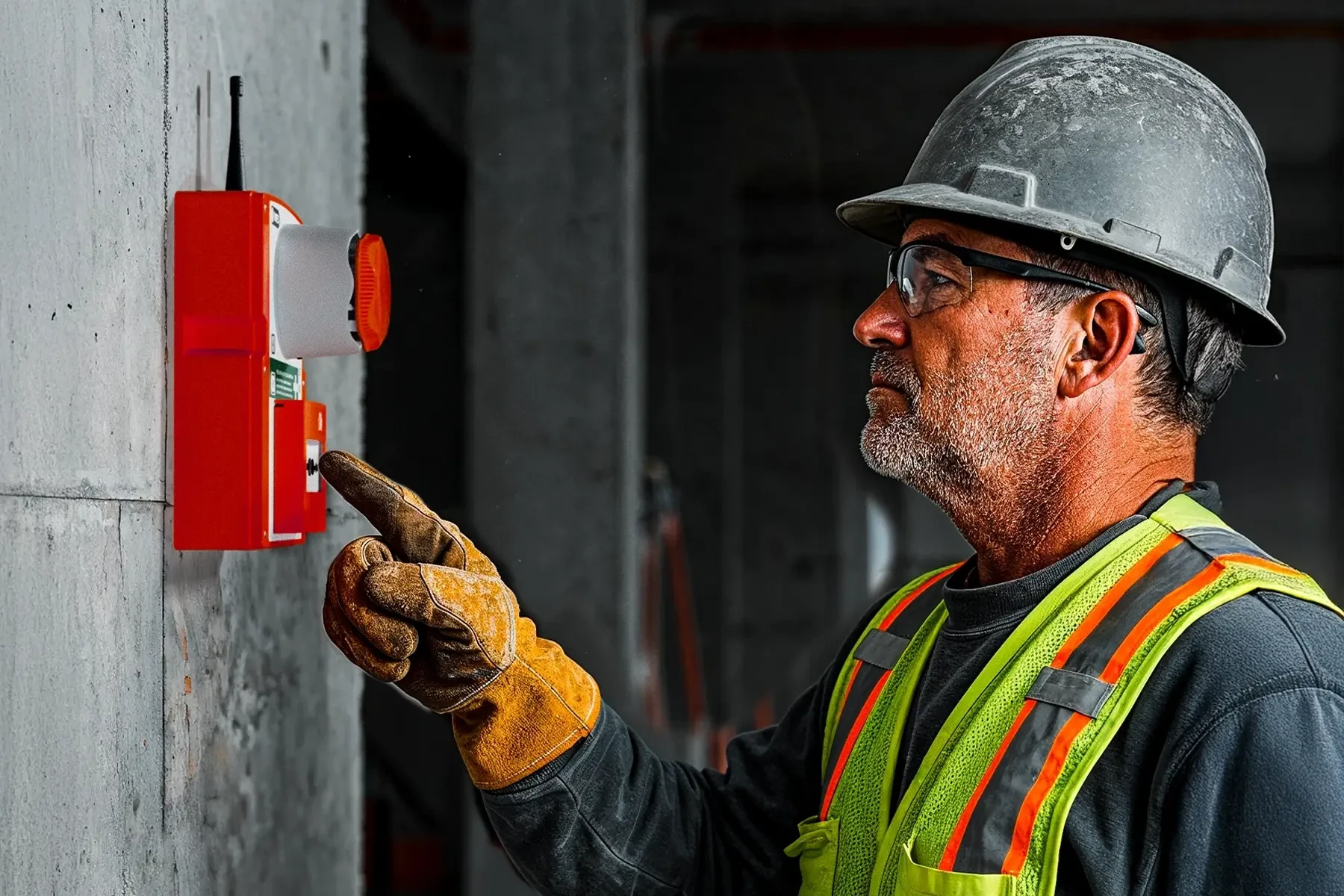
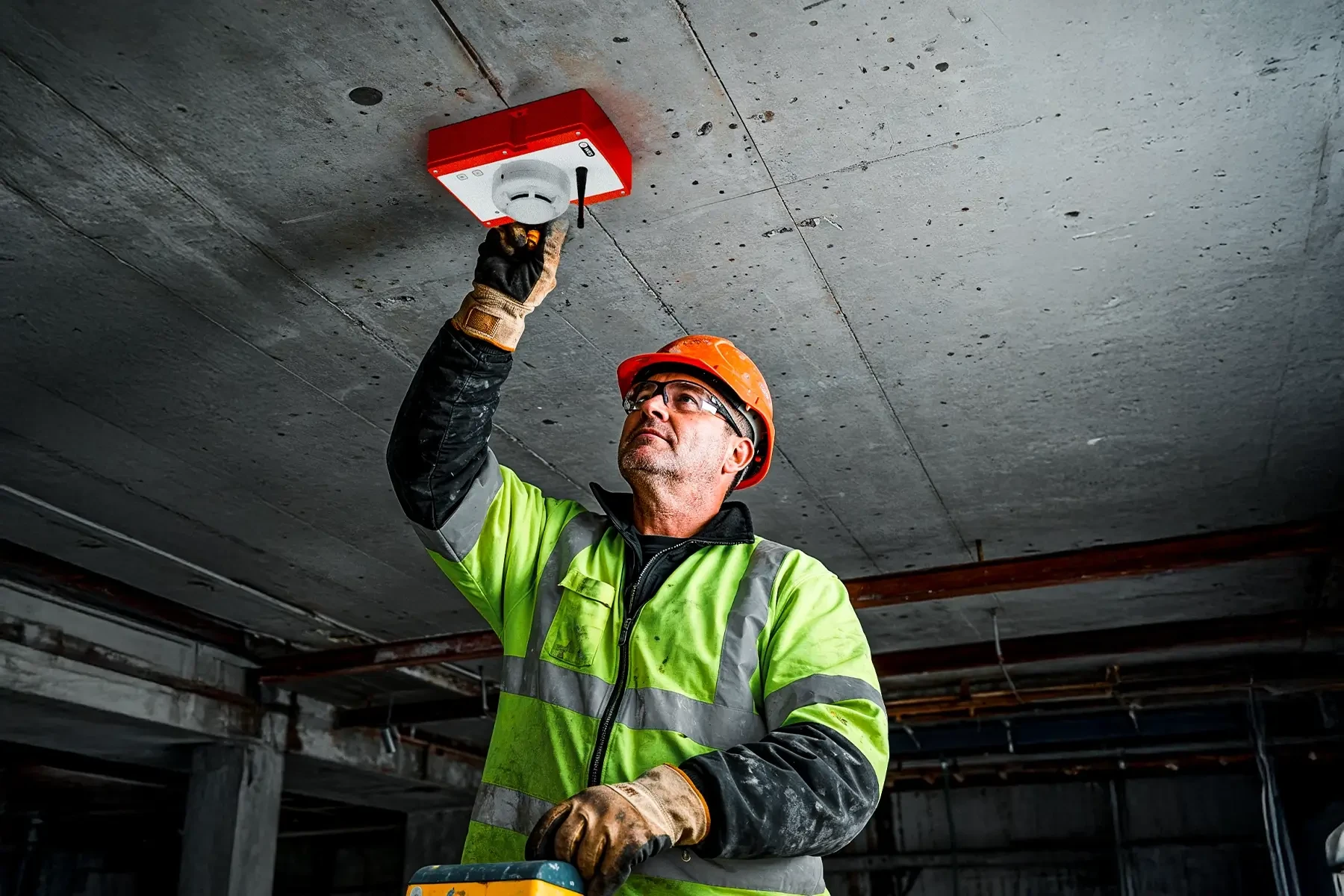
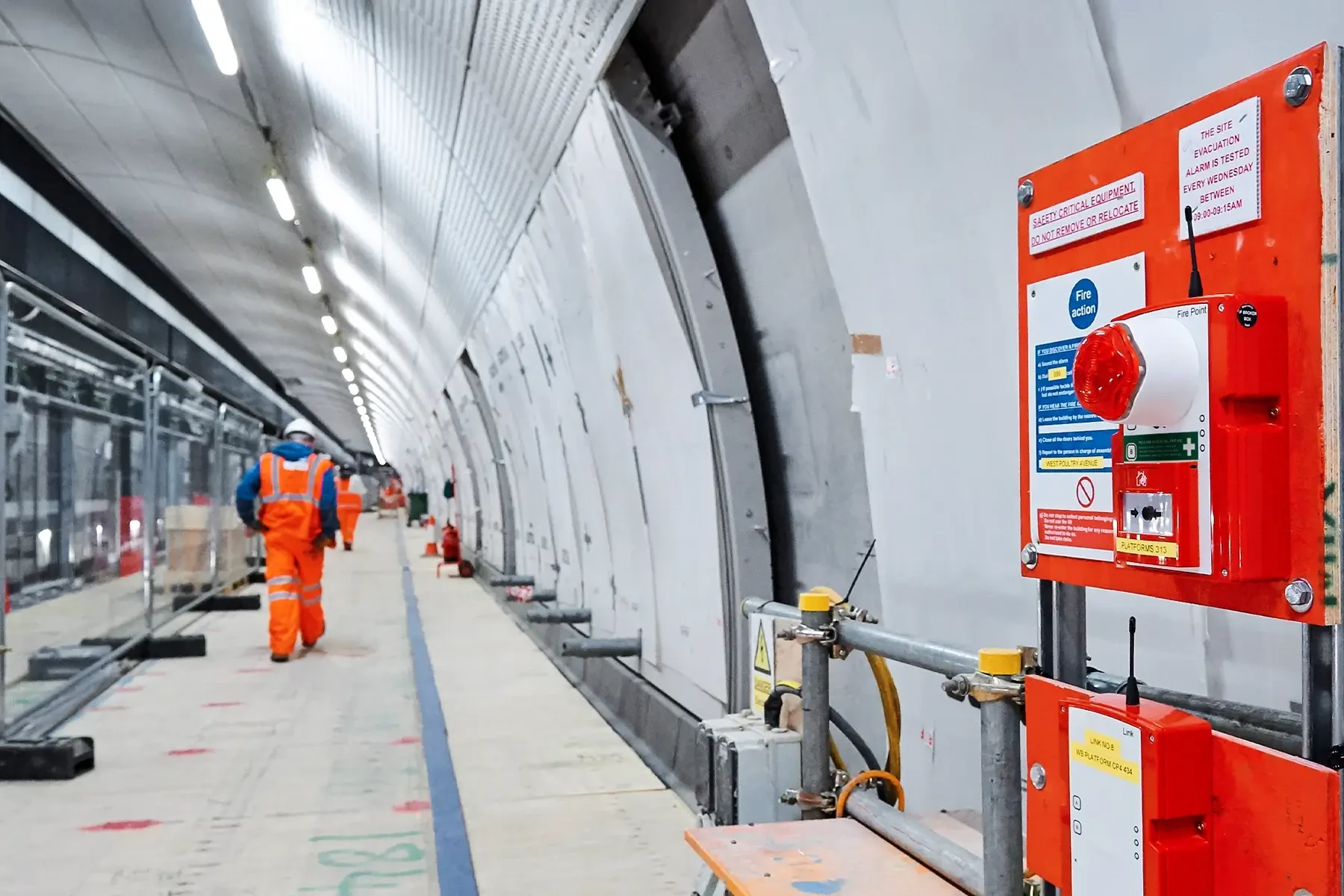
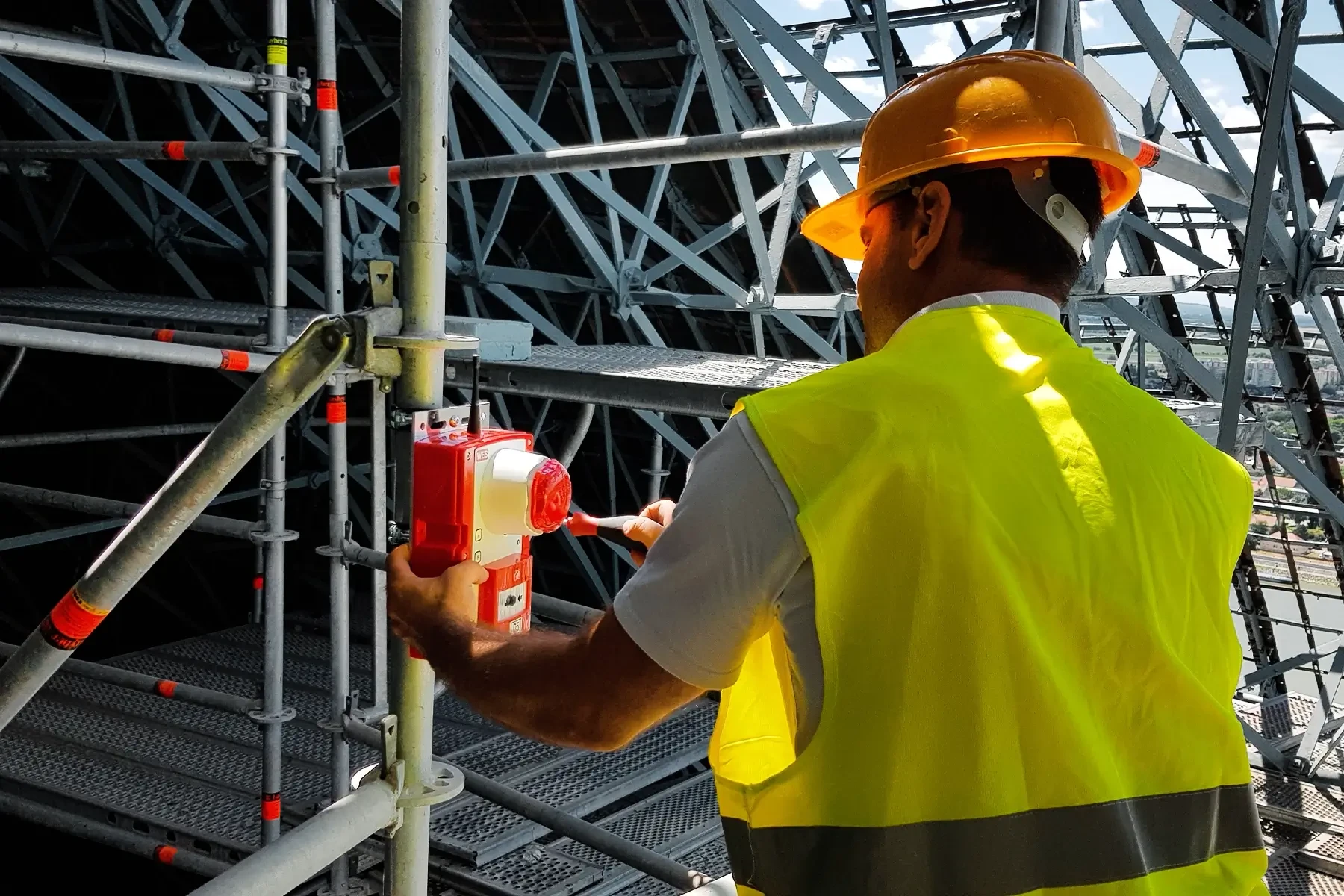
WES3 systems are commonly considered for sites where the fire alarm arrangement needs to change alongside the project.
Typical applications include:
New-build construction sites
Temporary buildings and accommodation
Site offices and welfare units
Site compounds
Scaffolded buildings
Refurbishment projects
Phased construction works
Fit-out projects
Vacant buildings undergoing work
Sites where the permanent fire alarm is not yet operational
For example, a project may begin with a small site compound and several ground-floor work zones. As additional storeys become accessible, more call points or detectors may be needed.
A wireless system allows the fire alarm arrangement to be adapted without repeatedly installing and removing temporary wiring.
Wireless alarms can also be useful on scaffolded sites. Call points can be positioned near access routes, stair towers or working levels so that workers can raise the alarm without first returning to the main building.
The suitability and design of any system should be based on the site fire risk assessment, fire plan and applicable project requirements.
A construction site can be difficult to protect with a fixed alarm arrangement.
Work areas regularly move. Temporary partitions can alter escape routes. New floors may open while other areas become restricted. Power may also be unavailable or unreliable in parts of the site.
Wireless site alarms provide several practical benefits.
Wireless devices do not require fire alarm cabling between every call point and detector.
This can reduce the amount of temporary cable that needs to be routed through work areas, scaffold structures and unfinished parts of the building.
Devices can be relocated as the site changes, provided the revised system is properly planned, configured and tested.
A call point that was originally installed at a ground-floor exit may later be needed on a new work level or beside a relocated access route.
A linked system helps communicate an alarm across multiple work areas.
This is particularly important on larger sites where a manually operated alarm in one location may not otherwise be heard elsewhere.
WES3 systems can combine manual call points with automatic smoke or heat detection.
Manual call points allow workers to raise the alarm after discovering a fire. Automatic detectors can provide additional protection in selected areas, including spaces that may be unattended.
The fire risks present on a site can change between project stages.
The alarm system can be reviewed and adjusted when new temporary buildings are added, combustible materials are stored in different areas or work moves to another floor.
Device | Main Purpose | Best Suited To | Key Considerations |
|---|---|---|---|
Allows workers to raise the alarm manually | Exits, escape routes, stairways, scaffold access points and active work zones | A person must discover the fire and activate the device | |
Automatically detects smoke | Clean, enclosed areas where smoke may be an early sign of fire | Dust, steam and fumes may affect suitability | |
Automatically responds to heat conditions | Workshops, plant areas and locations where dust or fumes are expected | May respond later than smoke detection for some types of fire | |
Provides smoke detection in dustier construction environments | Refurbishment zones, partially completed floors and dusty storage areas | Should not be installed directly beside heavy dust-producing work without assessment | |
Provides manual activation with audible and visual warning | Noisy areas, plant zones and locations where hearing protection is used | Alarm coverage should be assessed for both sound and visibility | |
Provides central system visibility and monitoring | Larger sites, multi-zone projects and sites requiring remote oversight | Check any monitoring, connectivity, activation or subscription requirements |
The correct WES3 system will depend on the size, layout and risks present on the site.
The following WES products perform different roles within the complete site alarm system.
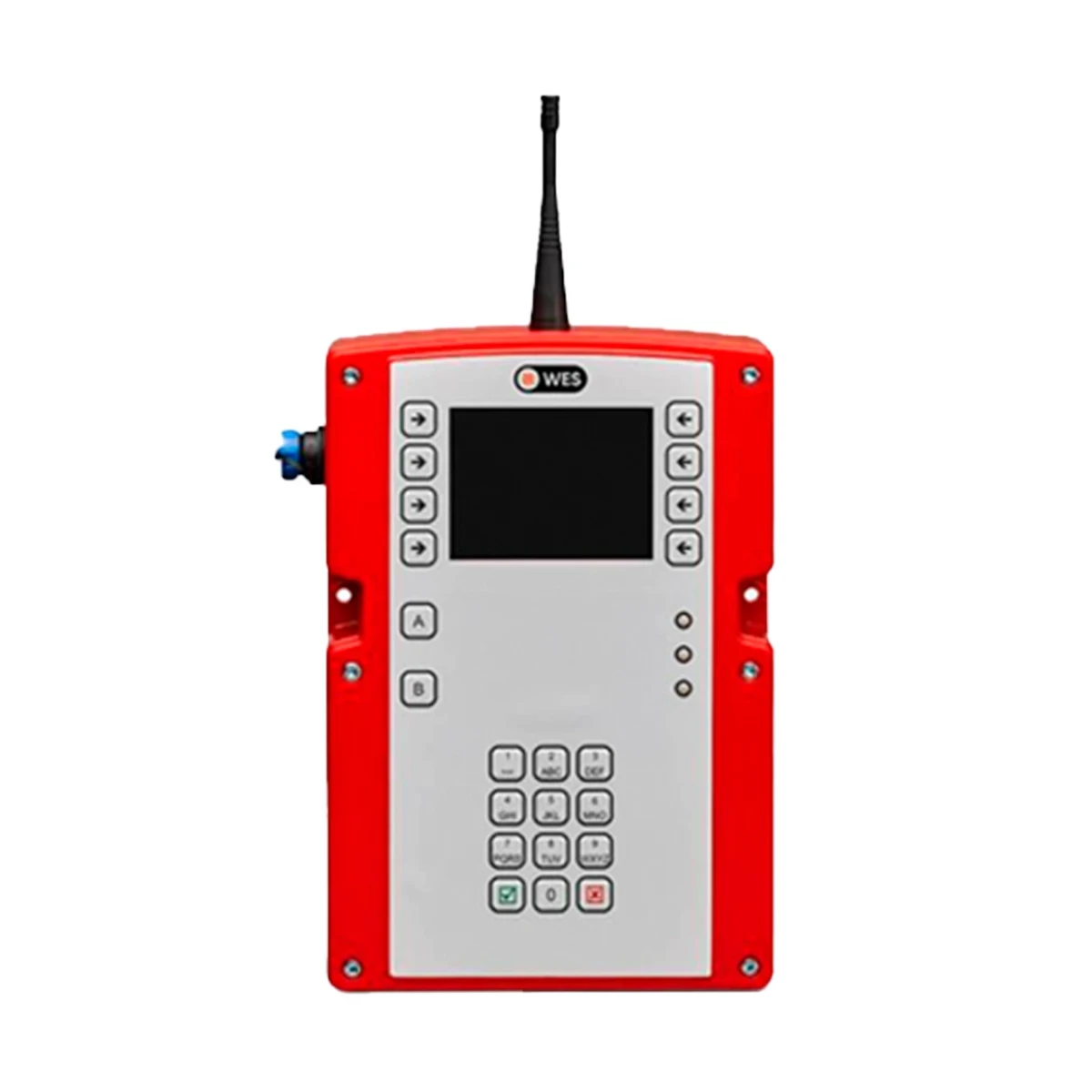
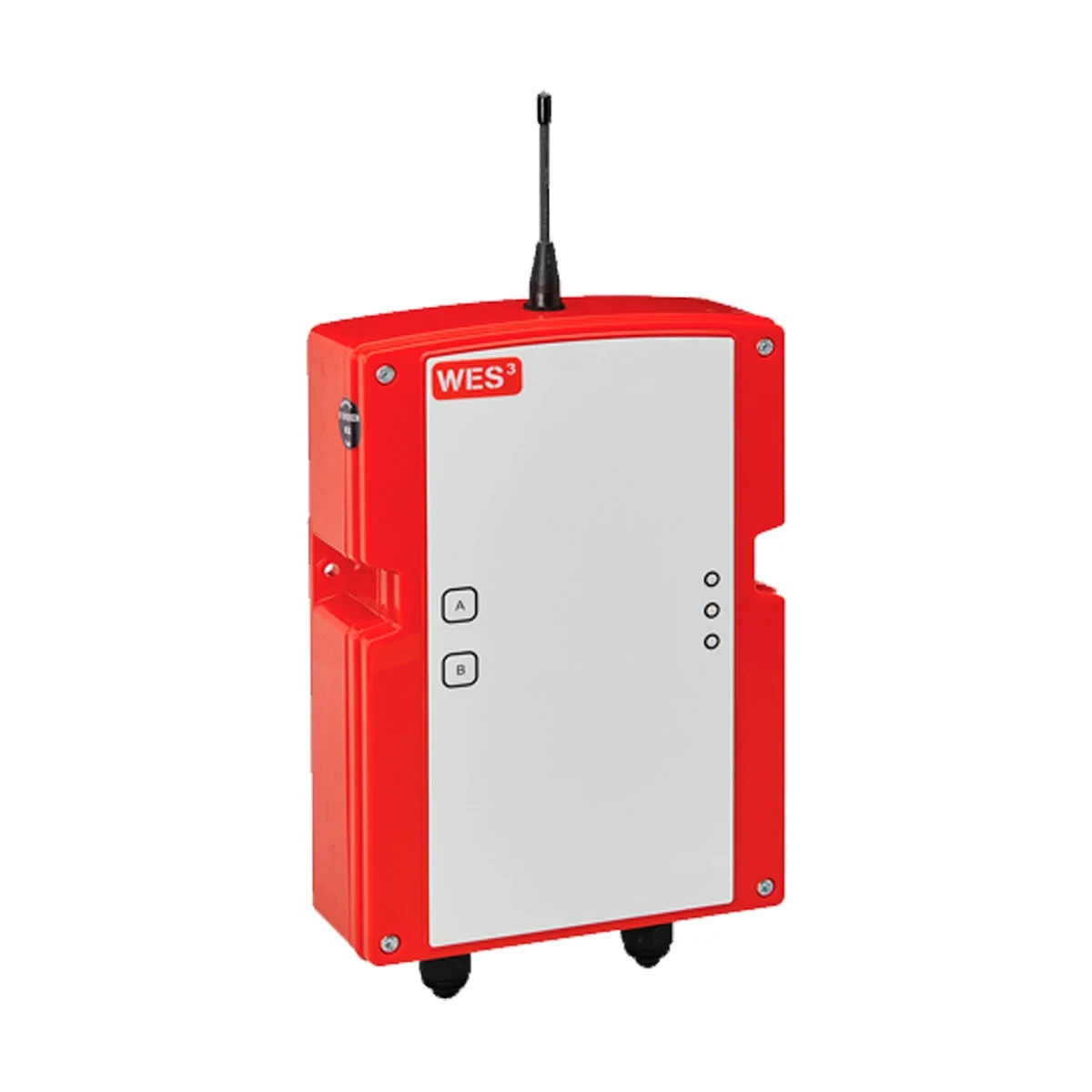
WES3 Connect provides central system visibility and monitoring functions for a WES3 network.
It can collect information from connected devices and provide users with records of alarm activations, detector activity, battery warnings, tamper events and communication faults. Cellular connectivity can also support configurable notifications and remote monitoring through the available WES platform.
This can be useful on larger or more complex projects where the site team needs a clearer view of the overall system.
For example, a site manager may need to know that a device has reported a low battery or signal problem rather than waiting for the issue to be discovered during a routine inspection.
Remote visibility can also be valuable when areas are unoccupied overnight or when responsibility for fire safety is shared between the site team, security staff and project management.
Monitoring does not remove the need for routine inspections, testing, maintenance or an appropriate emergency procedure.
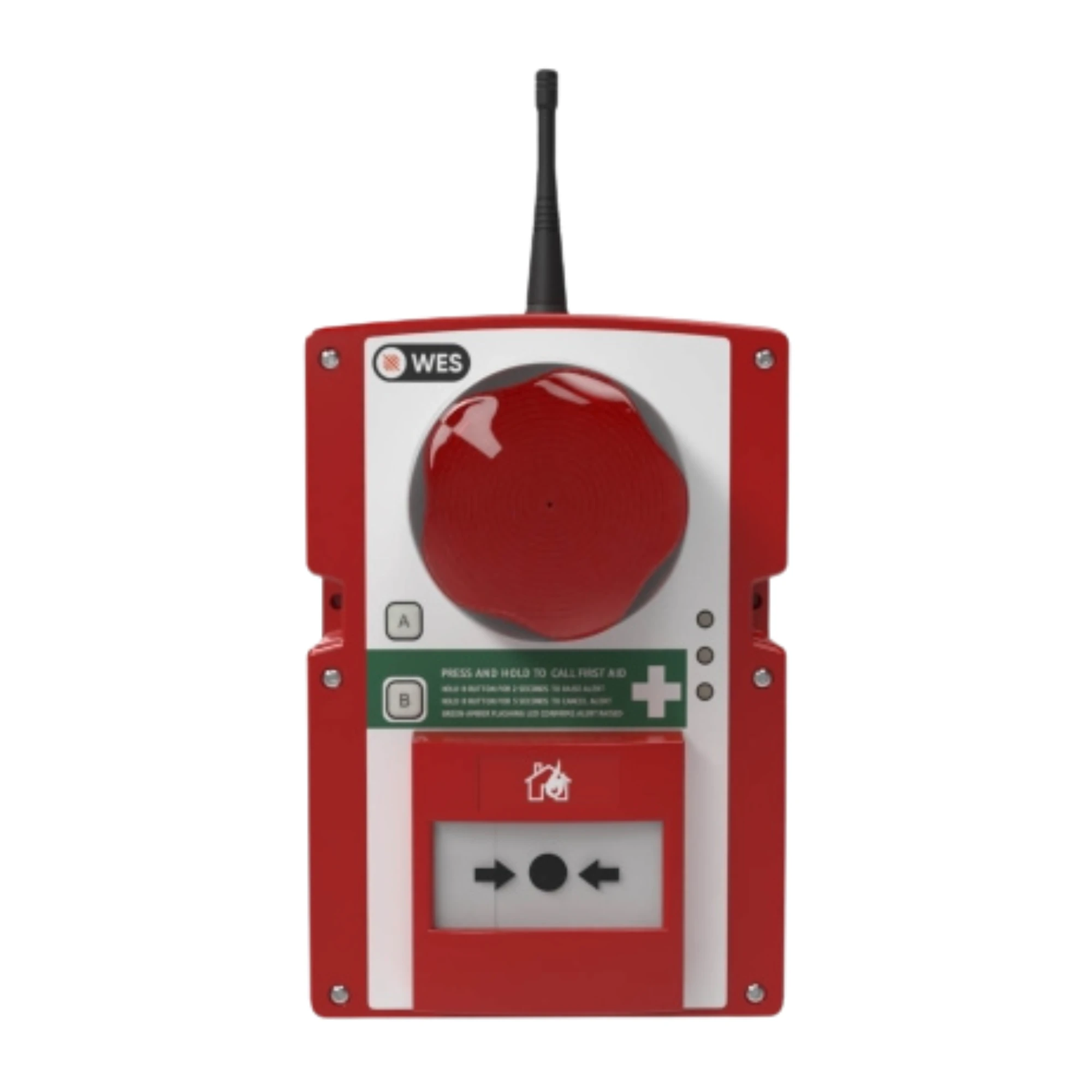
WES3 call points allow someone on site to raise the fire alarm manually.
They should be positioned where workers can reach them quickly, such as near exits, escape routes, access points, stairways and regularly occupied work areas.
Some WES3 call points also include a separate medical alert function, allowing users to raise a first-aid emergency without activating the fire evacuation alarm.
Manual call points are an important part of a temporary site alarm system because many construction site fires may first be identified by a worker.
A person carrying out hot works, using electrical equipment or moving through a storage area may notice smoke, flames or another immediate hazard before an automatic detector operates.
The number and position of call points should be reviewed whenever escape routes, working levels or access arrangements change.
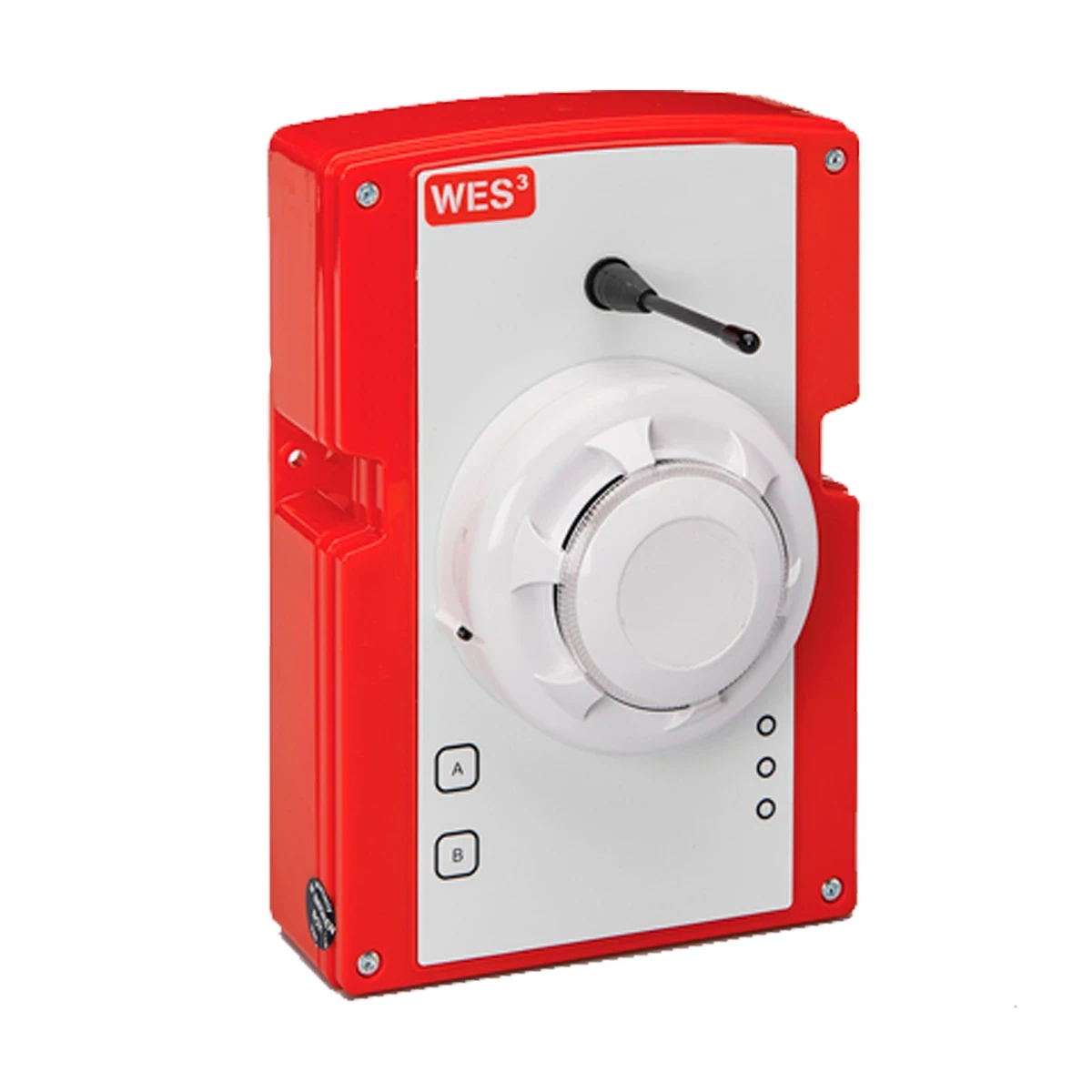
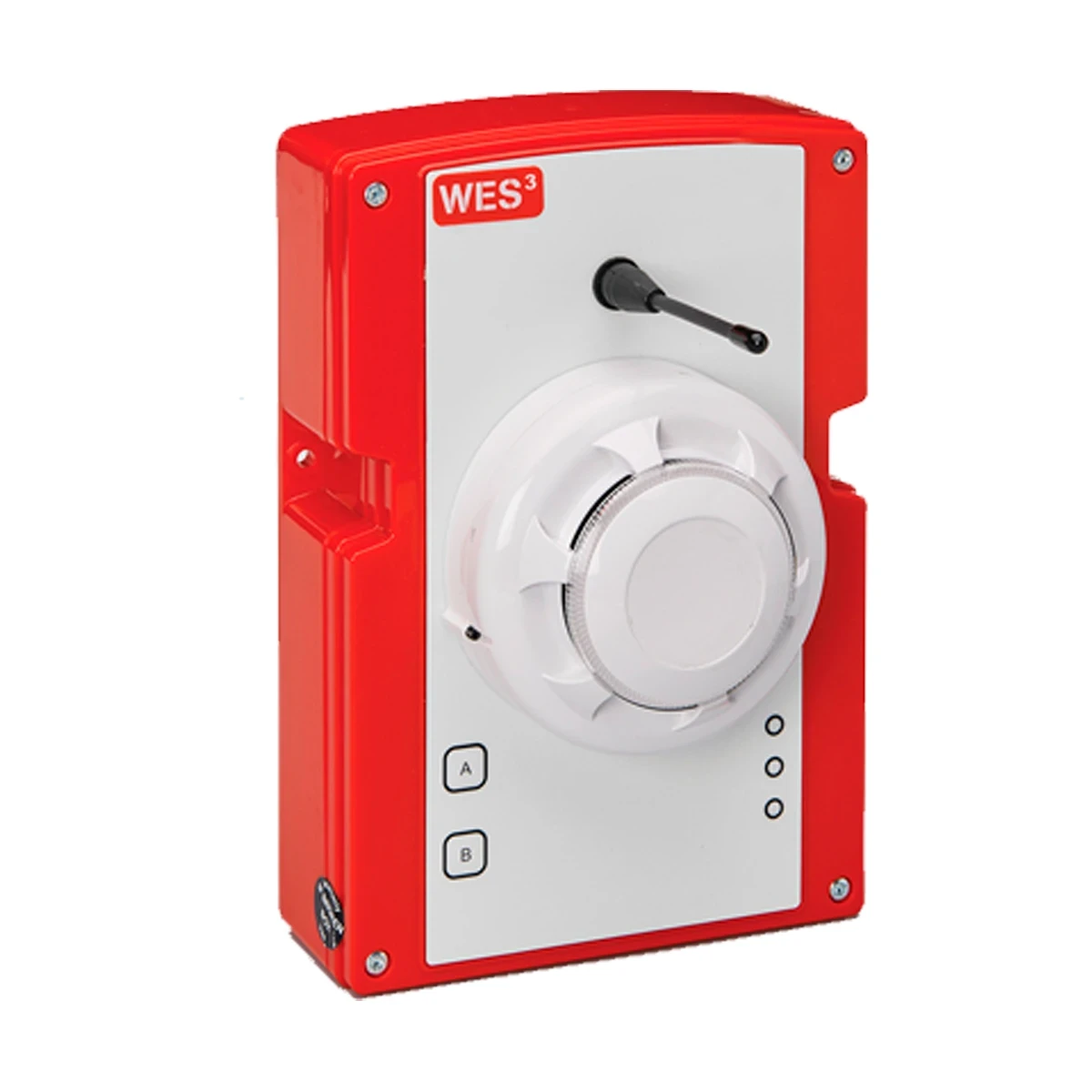
WES3 smoke detectors provide automatic detection when smoke is present in a protected area.
They can be useful in enclosed spaces where smoke is likely to be an early sign of fire.
Potential locations include:
Temporary offices
Meeting rooms
Welfare units
Dry storage rooms
Internal corridors
Enclosed plant or equipment rooms
Unoccupied internal areas
Automatic smoke detection can continue monitoring an area when workers are not present. This may provide earlier warning during breaks, overnight periods or weekends.
However, standard smoke detection may not be suitable in every active work zone. Dust, fumes and airborne particles can increase the likelihood of unwanted activations.
The environment and expected work activities should therefore be assessed before selecting a detector.
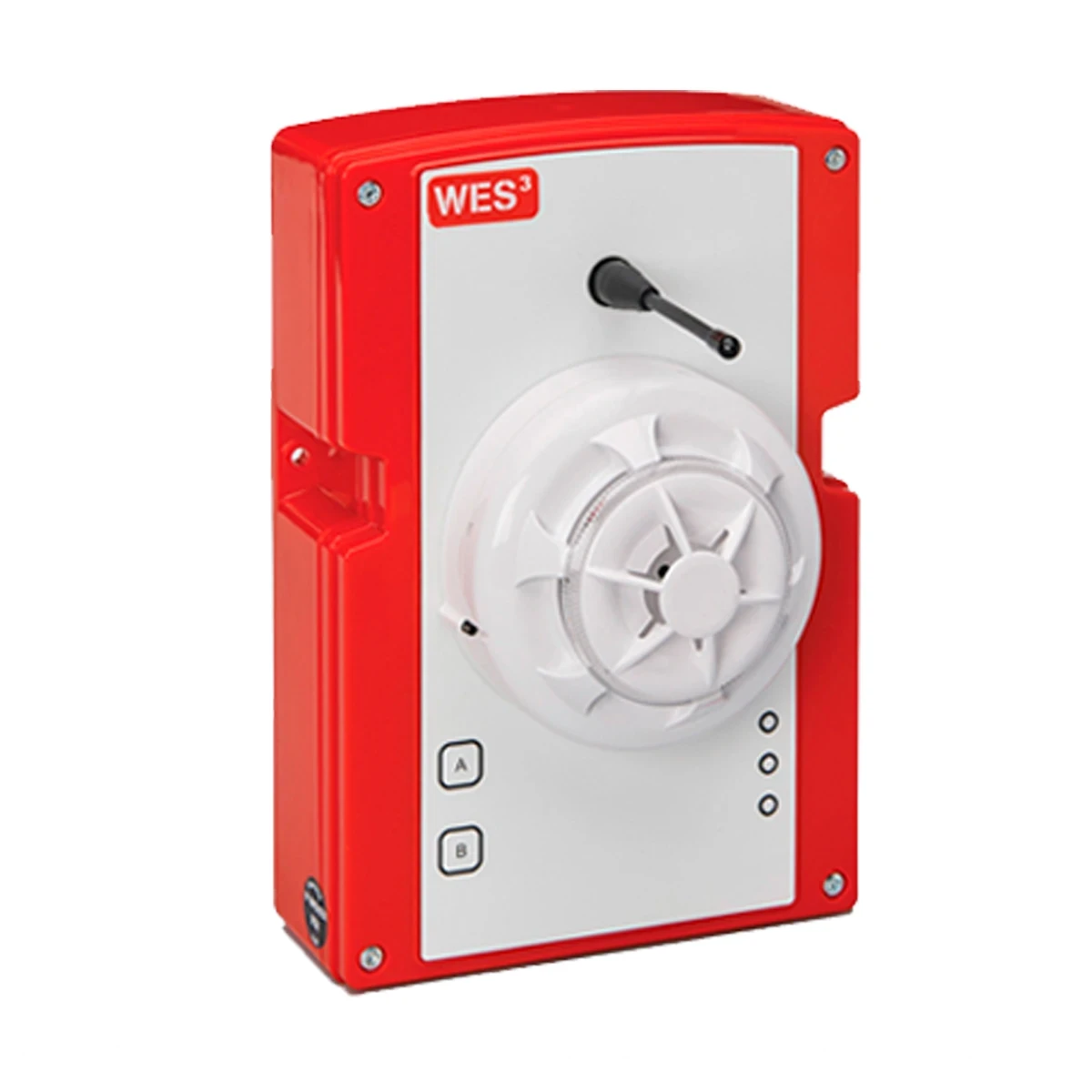
WES3 heat detectors respond to changes in temperature rather than directly detecting smoke.
They may be considered for areas where smoke detectors could be affected by dust, fumes, steam or normal work activities.
Potential applications include:
Workshops
Plant rooms
Areas near temporary heating equipment
Work zones where airborne particles are expected
Locations where normal activities could affect smoke detection
Heat detection can reduce some of the environmental problems associated with smoke detectors. However, a heat detector will generally respond differently from a smoke detector and may not provide the same early warning for a slowly developing, smoke-producing fire.
Detector selection should be based on the expected fire risk and site conditions rather than simply choosing the detector least likely to activate.
WES3 heat detectors connect to the wireless network and can automatically trigger the wider site alarm when heat is detected.
Construction work can create significant levels of dust.
Cutting, sanding, drilling, demolition and movement of materials can all introduce airborne particles that affect conventional smoke detection.
WES3 dustproof or dust-resistant smoke detectors are designed for construction environments where early smoke detection is required but dust is also likely to be present.
The WES3 dust-resistant detector uses dual-optic technology intended to help distinguish smoke from dust and reduce unwanted activations in challenging site conditions.
These detectors may be useful in:
Partially completed internal areas
Refurbishment zones
Storage areas affected by site dust
Enclosed work areas
Unoccupied sections of a dusty construction site
Areas where smoke detection is required but a standard detector may be unsuitable
A dust-resistant detector should not be treated as maintenance-free or suitable for every dusty environment.
Heavy contamination, direct exposure to cutting operations or incorrect positioning can still affect detection. The installation location and manufacturer guidance must be considered.
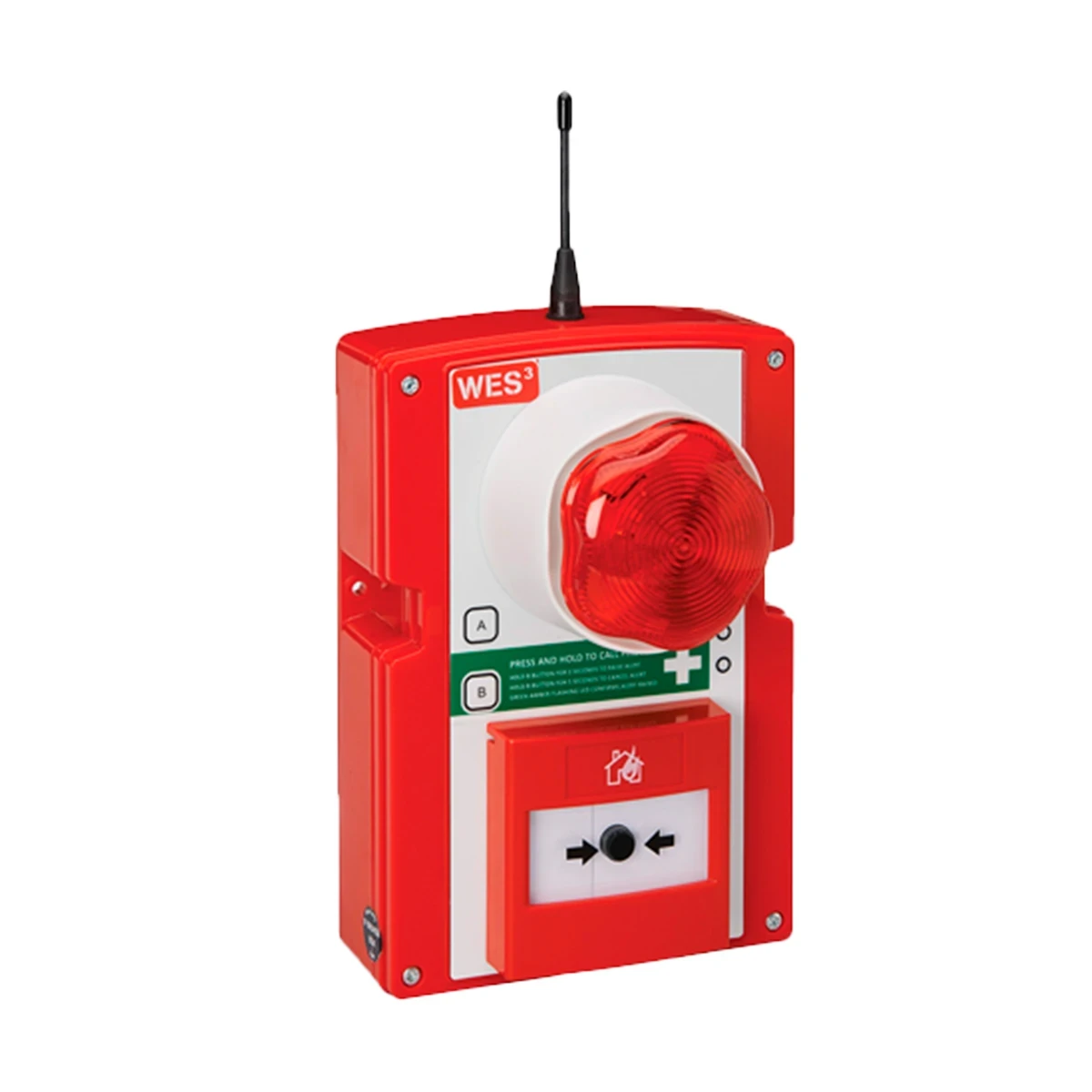
WES3 strobe and sounder call points combine manual alarm activation with audible and visual warning functions.
The sounder provides an audible evacuation signal. The strobe provides a visible indication that can support alarm awareness in areas where hearing protection, machinery or high background noise may make an audible signal more difficult to notice.
These units can be particularly useful in:
Noisy work zones
Plant areas
Workshops
External or partially enclosed working areas
Locations where workers regularly wear hearing protection
Areas where additional visual warning is appropriate
The WES3 strobe and sounder call point can be activated as part of the wider WES3 network, helping communicate the alarm across the site.
A visual alarm should not automatically be treated as a substitute for sufficient audible coverage. The warning method needs to be appropriate for the site population, working conditions and emergency plan.
A WES3 system can support several parts of a construction site fire strategy.
Faster Alarm Raising: Workers can activate a nearby call point instead of travelling to the site office or relying on someone else to communicate the emergency.
Wider Warning Coverage: Linked devices help alert workers across different floors, work zones, temporary buildings or scaffold levels.
Protection Outside Working Hours: Automatic detectors can continue to monitor selected internal areas when the site is unoccupied. This may be particularly relevant in temporary offices, welfare units, storage spaces and areas containing electrical equipment.
Adaptable Protection: Devices can be repositioned or added as the site develops. This allows the alarm layout to follow changes to work zones, site access and escape routes.
Improved System Awareness: Monitoring equipment can help responsible personnel identify alarms, faults, low battery warnings and communication issues. This can support maintenance planning and provide better visibility across a larger site.
Support for Emergency Procedures: A clearly recognisable site-wide alarm helps workers understand when they need to stop work and follow the evacuation procedure. The alarm system must still be supported by suitable induction, signage, fire points, escape routes, assembly points and regular drills.
Question | Why It Matters |
|---|---|
How many buildings, floors and work zones are in use? | Each separate area may need suitable alarm raising and warning coverage |
Where are the main exits and escape routes? | Call points should be accessible during an evacuation |
Which areas are occupied throughout the day? | Occupied areas may rely more heavily on manual alarm raising |
Which areas are regularly unattended? | Automatic detection may be needed to provide warning when nobody is present |
Are any areas particularly dusty? | Standard smoke detection may not be suitable |
Are there areas with steam, fumes or high temperatures? | Environmental conditions affect detector selection |
Where are workers using loud tools or hearing protection? | Additional sounders or visual warning devices may be required |
Where are hot works taking place? | Higher-risk activities may require additional alarm coverage and review |
Are combustible materials being stored? | Storage areas may require automatic detection and closer monitoring |
Will the site layout change during the project? | Devices may need to be repositioned or added as work progresses |
Does the site require remote system visibility? | WES3 Connect may help provide information on alarms, faults and device status |
Are all proposed devices compatible? | Wireless products from different systems should not be assumed to communicate |
Who will test and manage the system? | A responsible person should oversee testing, faults, batteries and device movements |
WES3 systems provide a flexible approach to temporary construction site fire alarms.
Wireless call points allow workers to raise an alarm manually, while smoke, heat and dust-resistant detectors can add automatic protection in selected areas. Sounder and strobe units can help communicate the warning across noisy or changing work zones.
The system should be planned around the fire risk assessment, site layout, escape routes, work activities and future project phases.
Compatibility must also be confirmed before products are purchased or moved around the site.
Browse the WES3 range at Fire Detection Shop or contact our team for help choosing compatible equipment for your construction site.
20/03/2025 • by Alice P