
Need assistance?
Need Assistance? Call Us 0330 058 0630
24/08/2026 • by Alice P
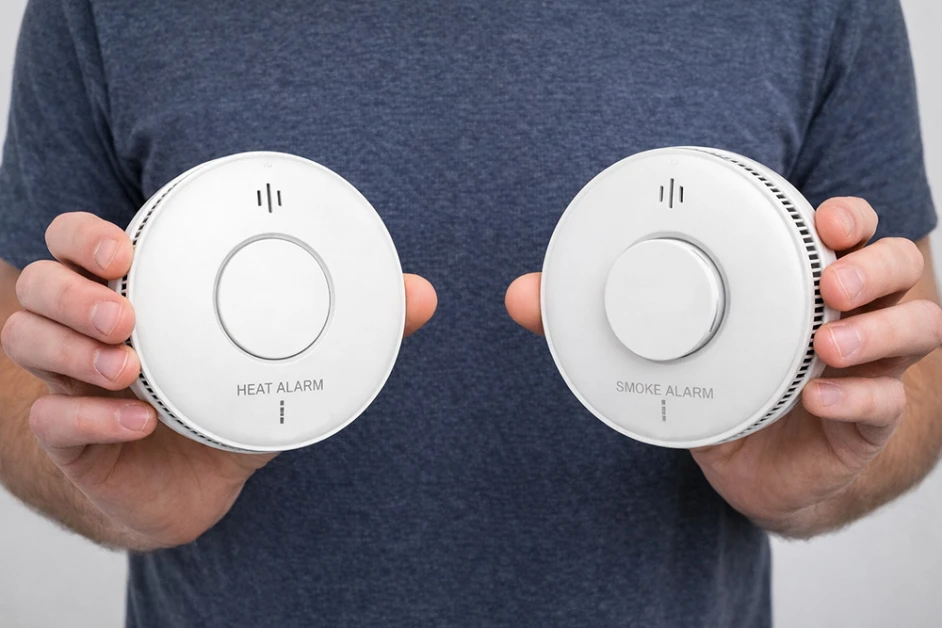
If you own, manage, or work on residential property in the UK, BS 5839-6 is the standard you need to know.
It sets out the recommendations for designing, installing, commissioning, and maintaining fire detection and fire alarm systems in domestic premises.
Unlike BS 5839-1, which covers commercial buildings, BS 5839-6 is built specifically for homes. That means houses, flats, houses in multiple occupation (HMOs), and sheltered housing schemes.
BS 5839-6 is the British Standard code of practice for domestic fire alarm systems. The current version is BS 5839-6:2019+A1:2020, which replaced the 2013 edition and brought in a significant overhaul of the grading structure.
It applies to:
Single-family houses and flats
Houses in multiple occupation (HMOs)
Sheltered and supported housing
Domestic areas within mixed-use buildings
The standard is aimed at architects, installers, enforcing authorities, and anyone responsible for fire precautions in residential property.
It is not written for homeowners to self-specify against, but understanding the basics helps landlords, developers, and property managers ask the right questions.
ex vat
ex vat
ex vat
ex vat

ex vat
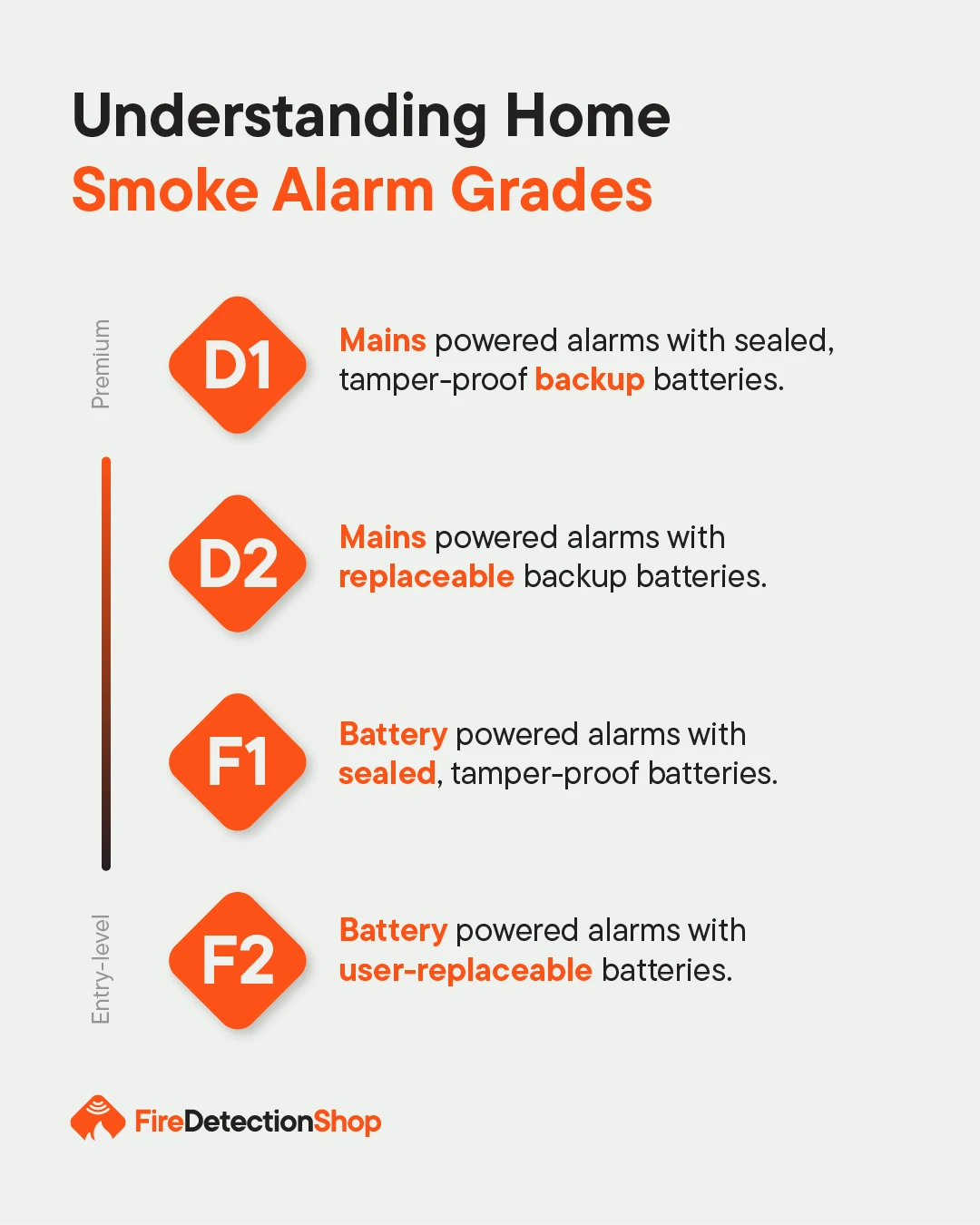
The alarm grade refers to the type of equipment and how the system is powered, for example, battery powered or mains powered.
BS 5839-6 covers Grades C through F, with Grade A and B reserved for BS 5839-1 commercial fire alarm systems.
Grade C: A system of detectors and sounders linked to a central control panel, with a standby power supply.
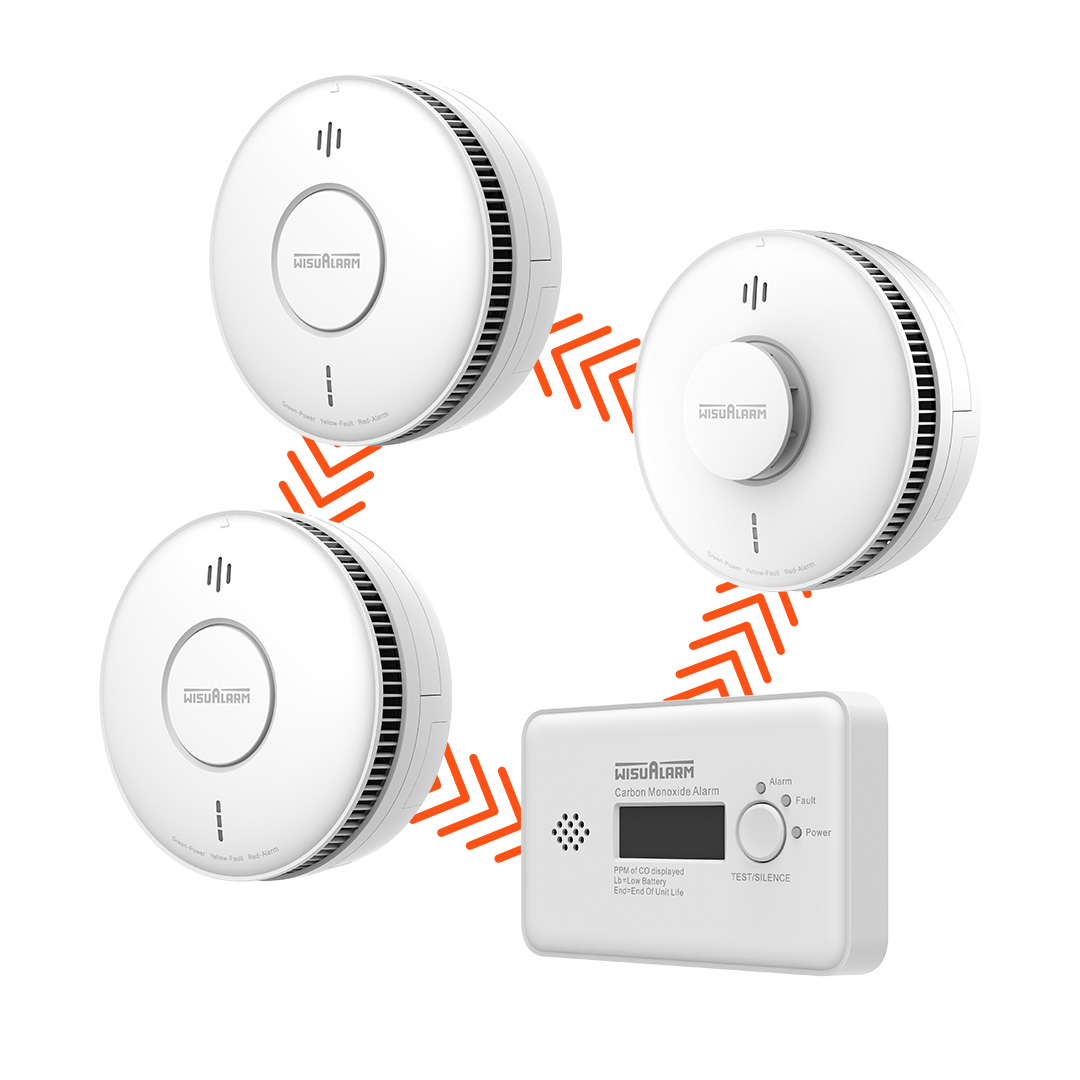
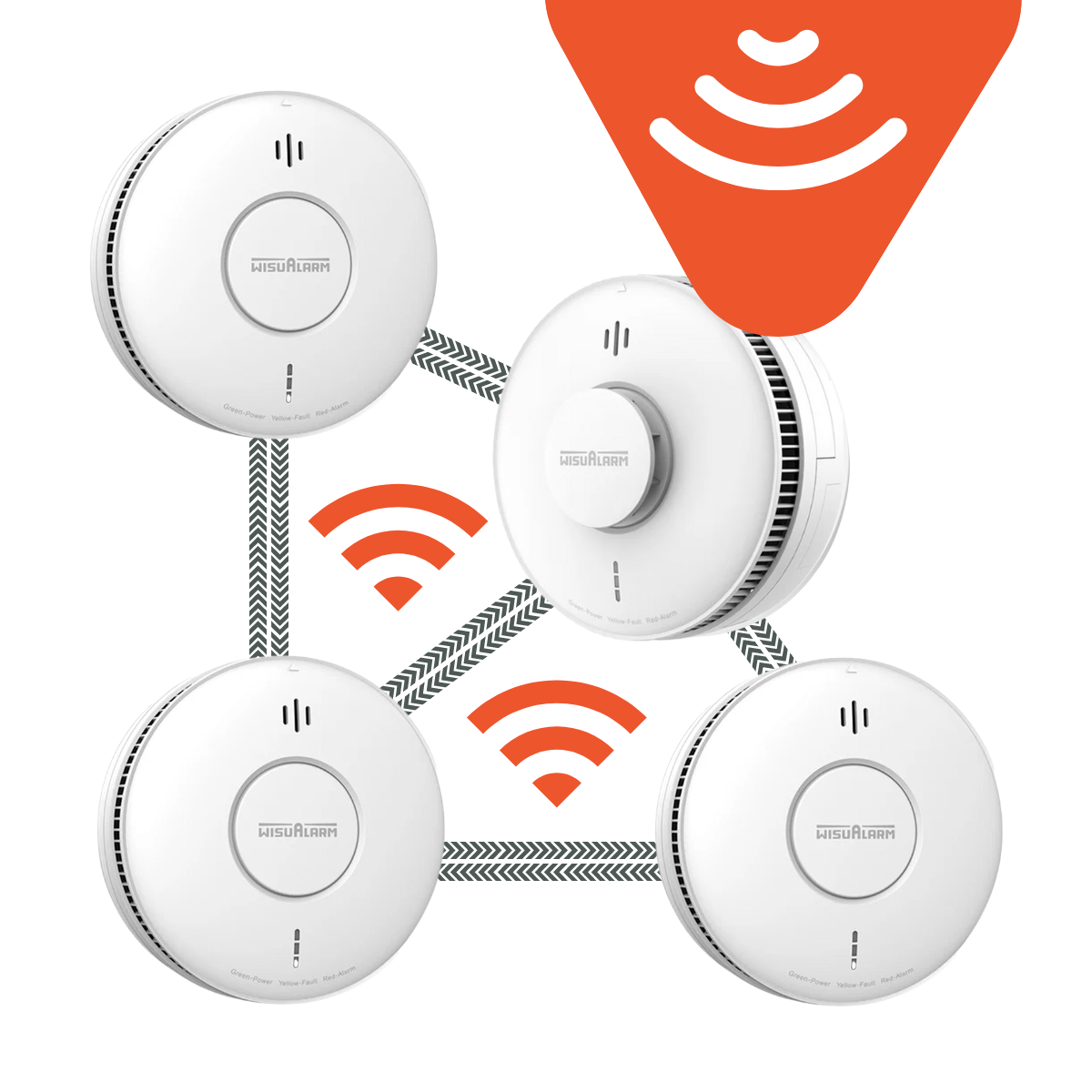
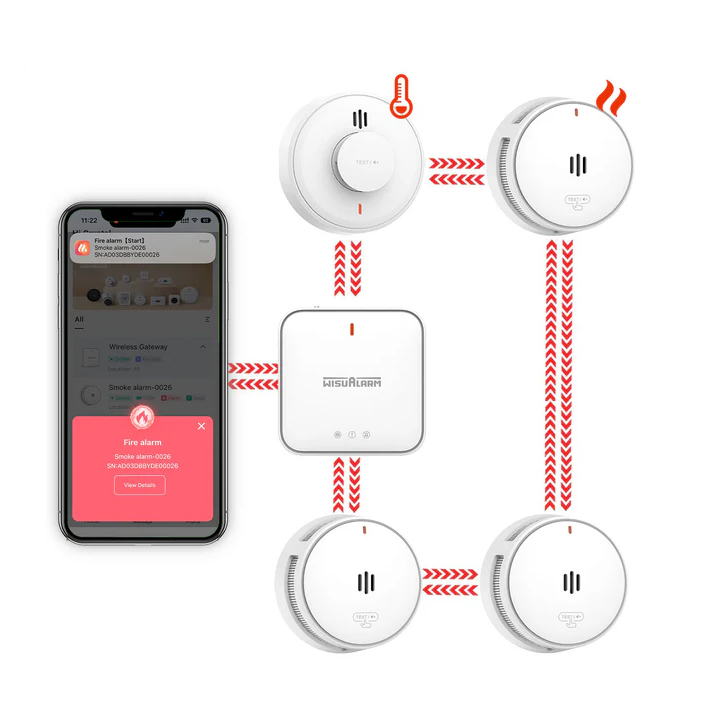
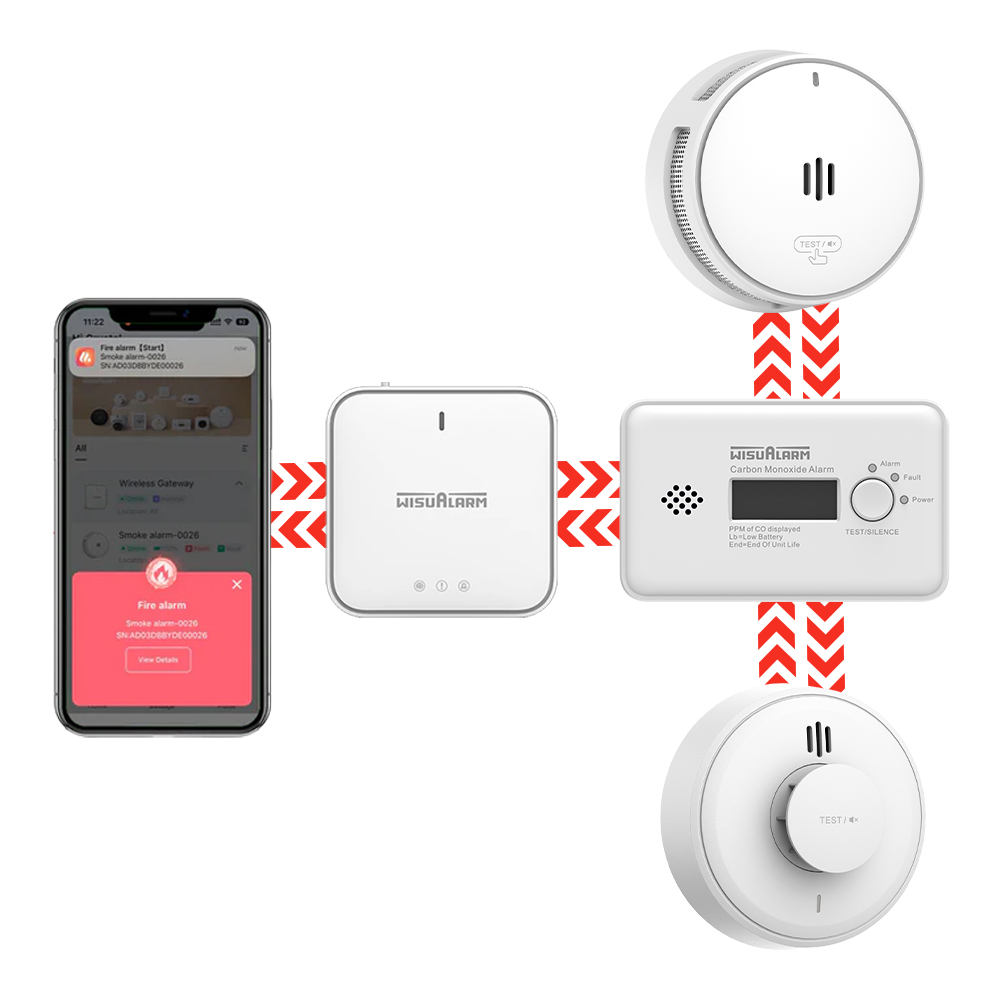
Grade D1 and D2: Mains-powered smoke and heat alarms with a standby battery supply, interlinked so that one alarm triggers all of them. D1 and D2 differ in how the standby power is provided.
Grade E: Mains-powered alarms without standby battery back-up, interlinked.
Grade F1 and F2: Battery-only standalone alarms. F1 units are interlinked, F2 are not.
Grade D2 is the most common specification for new-build single-family homes under building control.
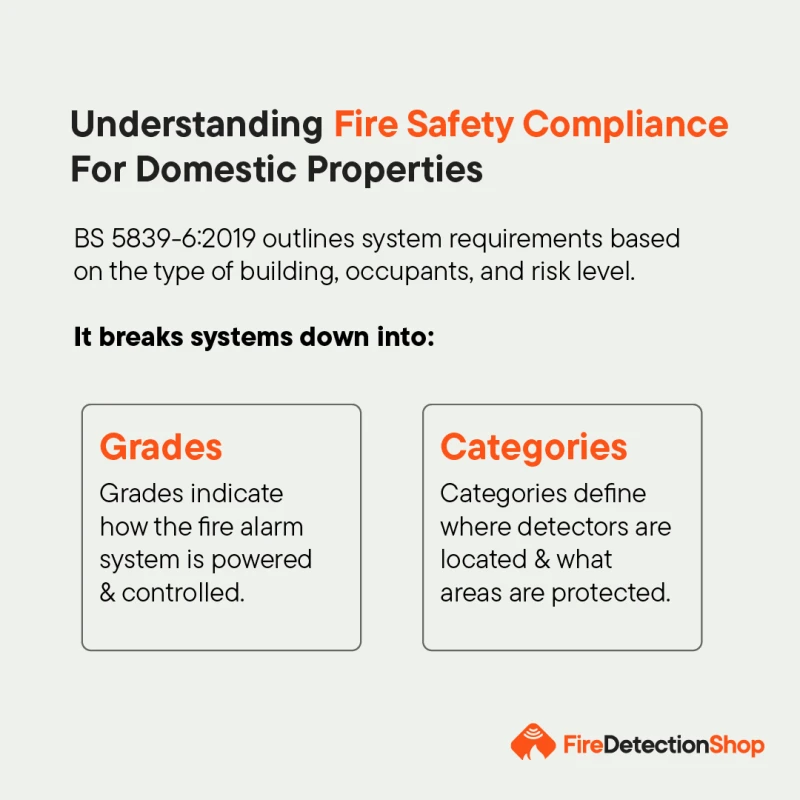
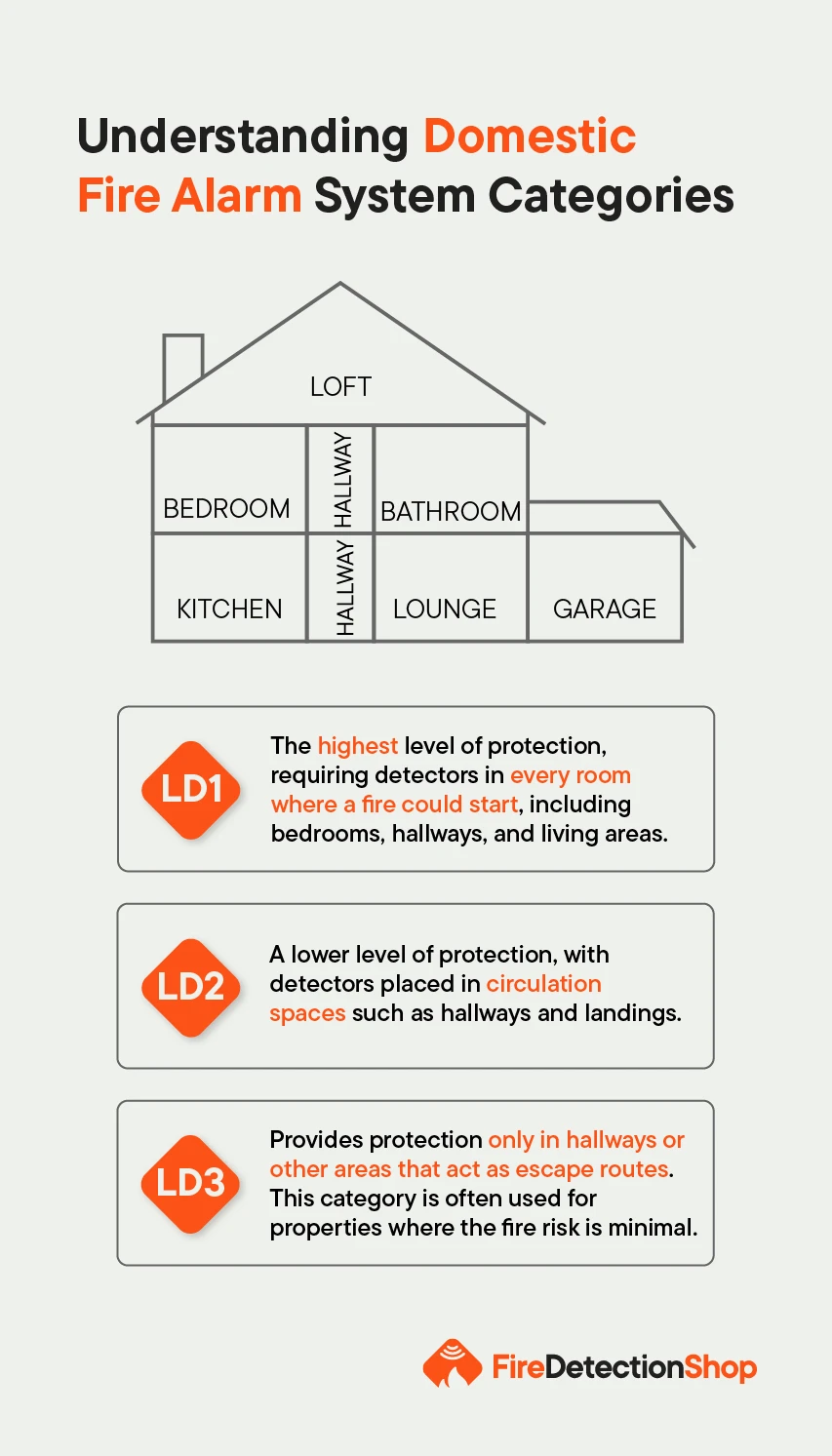
Where grade tells you the type of system, category tells you how much of the property it protects. BS 5839-6 uses four categories:
LD1: Detection throughout the property, including circulation areas and most rooms, offering the highest level of coverage
LD2: Detection in circulation areas plus rooms presenting a higher fire risk, such as the kitchen and living room
LD3: Detection limited to circulation areas and escape routes only
LD4: The minimum standard, typically detectors in circulation areas at each storey
Most single-family homes are specified at Grade D2, Category LD2 or LD3. Larger properties, HMOs, and multi-storey dwellings often require Grade A, Category LD1 as a minimum.
The standard identifies several types of detection, each suited to a different location:
Smoke detectors: circulation areas, hallways, and escape routes
Heat detectors: kitchens, where smoke detectors risk false alarms
Multi-sensor detectors: rooms where fire risk profile is mixed
Carbon monoxide alarms: rooms with fuel-burning appliances
Getting detector type and placement right is as important as choosing the correct grade and category.
Specifying the wrong grade or category carries real consequences:
A property that fails a fire safety inspection under the Regulatory Reform (Fire Safety) Order 2005
Insurance claims that can be challenged or refused
Landlords and responsible persons facing enforcement action
For rented and multi-occupancy property in particular, matching the system to the correct BS 5839-6 specification is not optional. It is the basis on which fire risk assessments and building control sign-off rest.
Getting BS 5839-6 right protects lives first, and protects landlords, developers, and installers from compliance risk second. When in doubt, the grade and category should always be confirmed against a site-specific fire risk assessment rather than assumed from property type alone.
 BS 5839-6 covers fire alarm systems in domestic premises
The current edition is BS 5839-6:2019+A1:2020
Grades (C to F) define the equipment and power supply
Categories (LD1 to LD4) define the extent of coverage
The right specification depends on the property and fire risk
BS 5839-6 covers fire alarm systems in domestic premises
The current edition is BS 5839-6:2019+A1:2020
Grades (C to F) define the equipment and power supply
Categories (LD1 to LD4) define the extent of coverage
The right specification depends on the property and fire risk
BS 5839-6 covers fire alarm systems in domestic premises
The current edition is BS 5839-6:2019+A1:2020
Grades (C to F) define the equipment and power supply
Categories (LD1 to LD4) define the extent of coverage
The right specification depends on the property and fire risk
BS 5839-6 covers fire alarm systems in domestic premises
The current edition is BS 5839-6:2019+A1:2020
Grades (C to F) define the equipment and power supply
Categories (LD1 to LD4) define the extent of coverage
The right specification depends on the property and fire risk
ex vat
ex vat
ex vat
ex vat
ex vat


