
Need assistance?
Need Assistance? Call Us 0330 058 0630
12/01/2026 • by Alice P
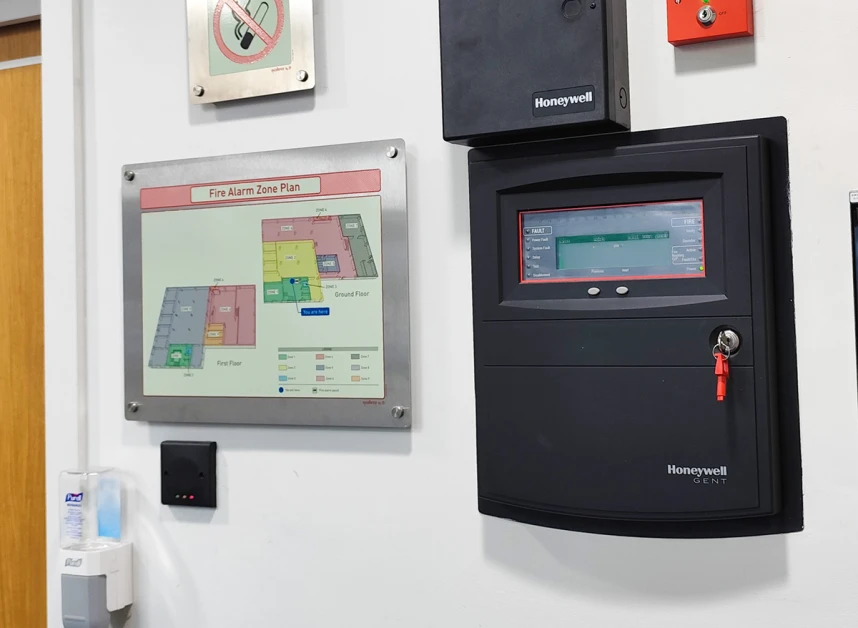
Fire alarm zone plans are an integral part of a complete fire alarm system. They play a vital role in ensuring a fire alarm system is compliant. According to BS 5839-1, every fire detection system must include a clearly presented zone plan to help users and emergency responders quickly identify where an alarm has been triggered.
A fire alarm zone plan is a diagram that illustrates the layout of a building. It shows how the building is divided into separate fire alarm zones.
The diagram includes key building features, such as entrances, exits, and floor levels, for example.
The primary purpose of a fire alarm zone plan is to understand where in the building a fire alarm has been triggered. This is important for emergency services to locate the location of a fire.
Zone plans are required in all sizes of commercial buildings, but they’re particularly important in larger and more complex buildings, such as a hospital or shopping centre.
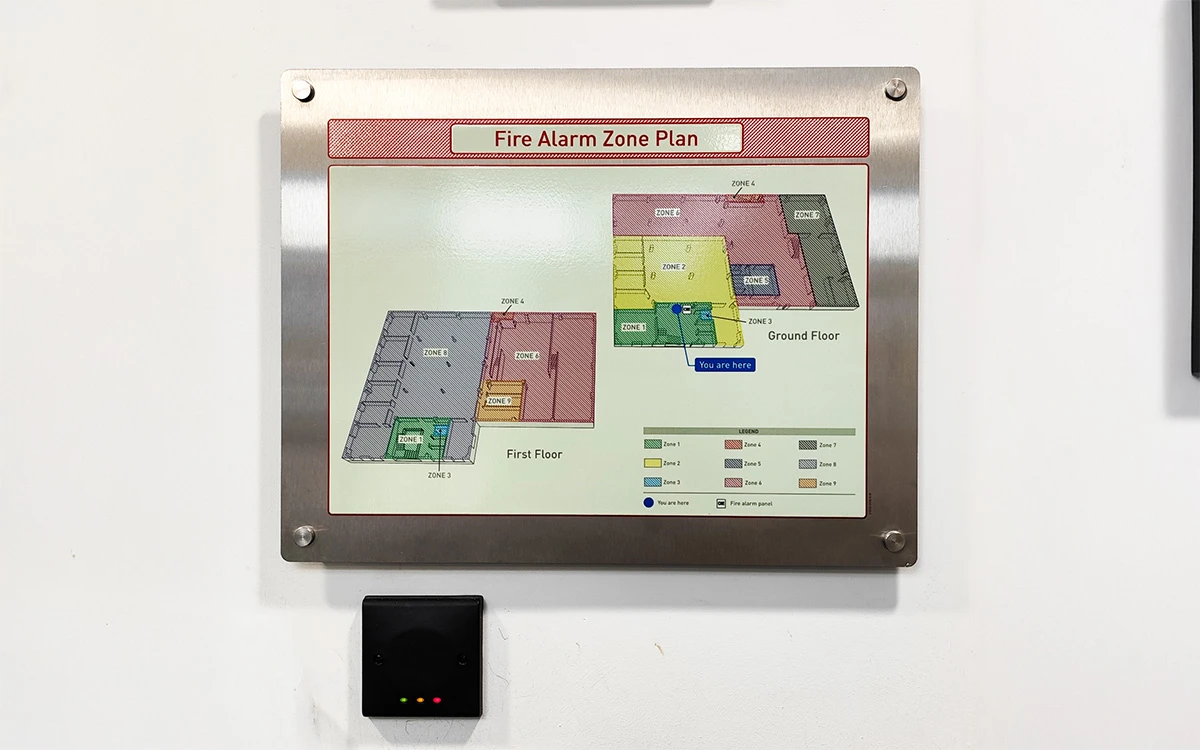
In the UK, a fire alarm zone plan is a legal requirement which is mandated by BS 5839. If your property has a commercial fire alarm system, then you should have a clear zone plan that sits adjacent to the fire alarm control panel. If you are in a domestic property with domestic smoke alarms, you do not require a zone plan.
BS 5839 1:2025, the current version of the British Standard for fire detection and fire alarm systems, makes it mandatory to provide a zone plan next to every fire alarm Control and Indicating Equipment (CIE).
This includes the main control panel as well as any repeater panels installed in different locations throughout the building.
Without a compliant and up-to-date zone plan, building owners and installers risk non-compliance and potential enforcement action.
Most importantly, missing or incorrect plans can endanger lives by delaying emergency response and evacuation.

BS 5839 clearly states that a zone plan must be located adjacent to the fire alarm control panel.
This ensures it is visible and accessible immediately when an alarm is activated. The zone plan must also be correctly oriented to match the perspective of someone standing in front of the panel.
For example, if a user is facing north in real life, the plan must also be presented with north at the top.
Interestingly, the FIA has found that one of the most common mistakes found during fire alarm servicing is the zone plan being in the incorrect position.
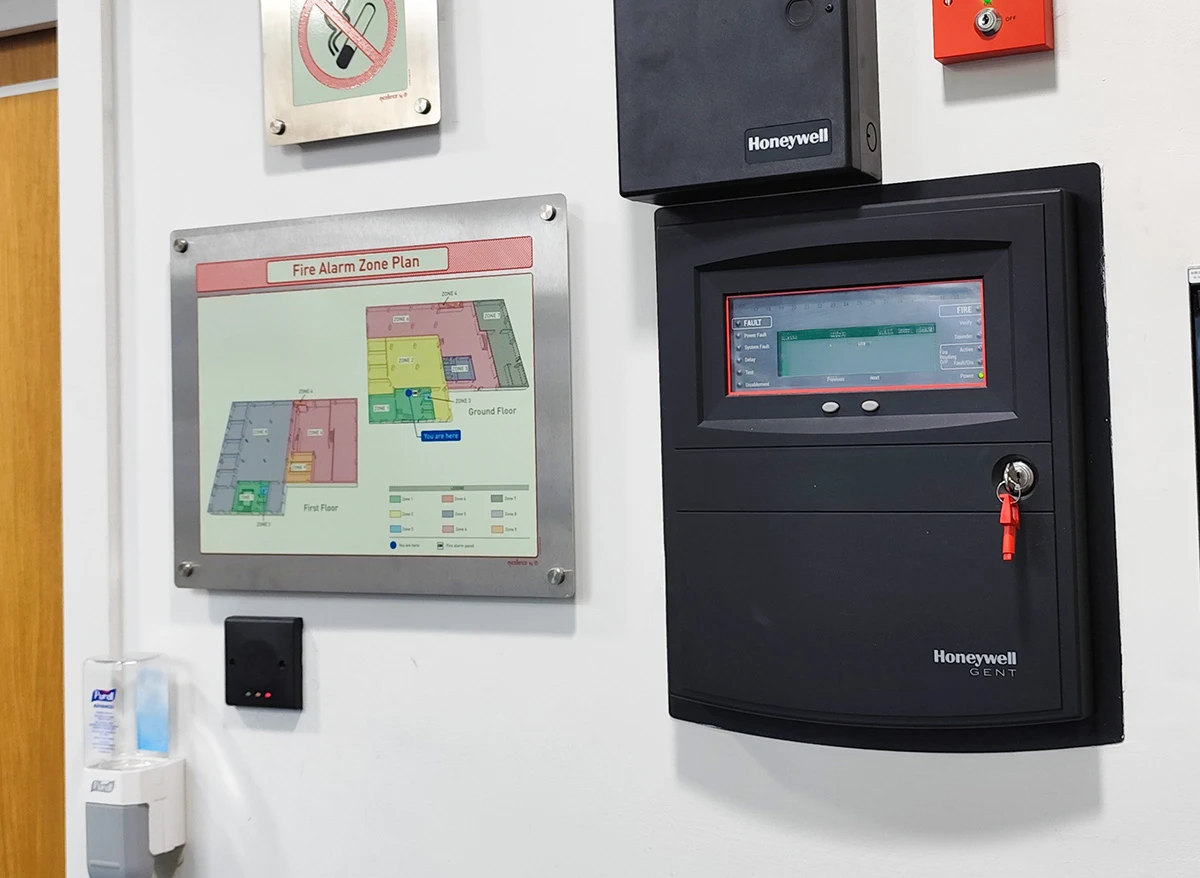
To ensure a fire alarm zone plan is compliant with BS 5839, each diagram must include the following information:
Zone boundaries and labels: Each fire detection zone should be clearly numbered and match the zone indicators on the fire alarm control panel.
“You are here” marker: This helps users quickly orient themselves in the building and understand where they are in relation to the zone where the alarm was triggered.
Building layout: The plan should show all relevant areas, including rooms, corridors, stairs, lifts and fire exits.
Escape routes: Final exits and escape routes must be marked clearly.
Legend and symbols: Any symbols used must be explained using a legend to avoid confusion.
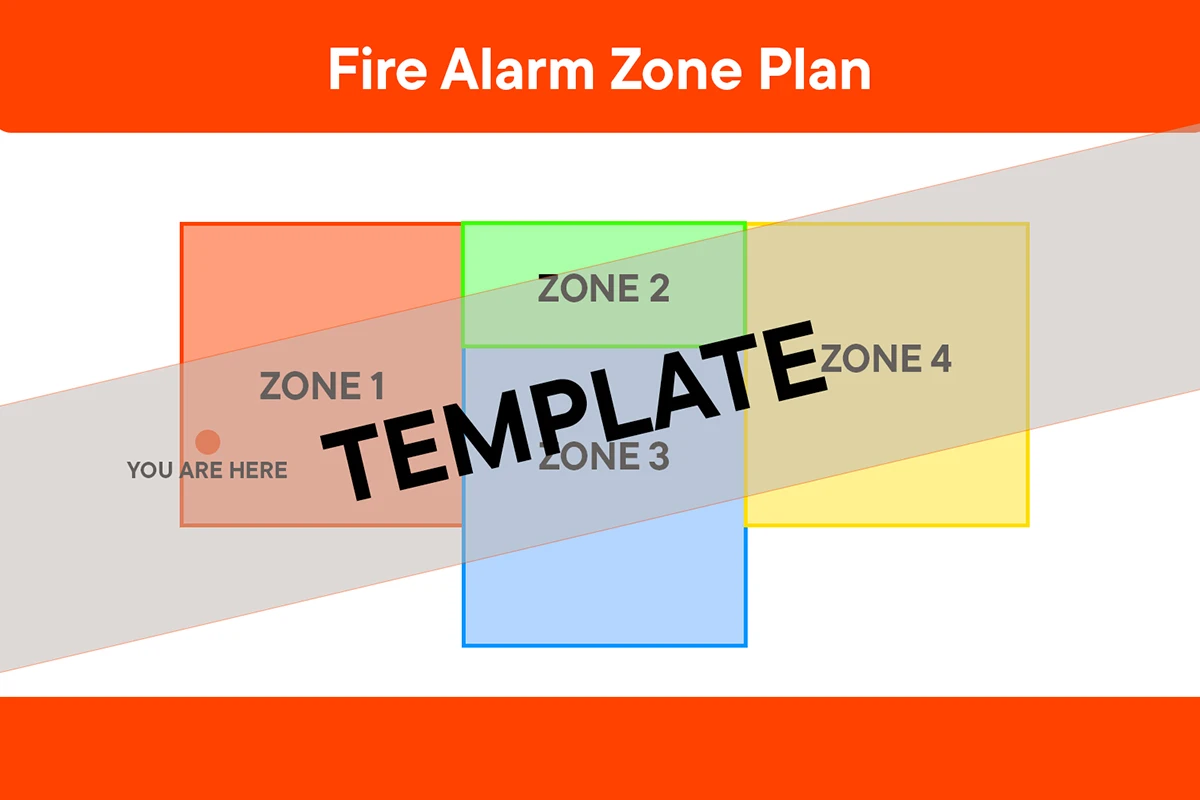
The layout should be kept simple, clear, and easy to read. It should avoid excessive detail that could distract or overwhelm users in an emergency. Many engineers use a fire alarm zone plan template; however, these templates can lead to unclear and non-compliant zone plans.
Many engineers have trouble drafting a fire alarm zone plan. This is mainly due to expensive subscriptions or services that require you to sign up to a long-term contract. To combat this obstacle, we offer a fire alarm zone plan creation service.
We have tried to make this zone plan service as simple as possible. If you purchase a fire alarm control panel or fire alarm kit, you can add an optional fire alarm zone plan. Simply send us details of the building’s layout and our in-house engineers will produce your zone plan and send your PDF via email.
The benefit is you can order these zone plans on the one-off without signing up to any long-term contracts. If you’d like to find out more contact us on 0330 058 0630 or email [email protected]
06/11/2025 • by Alice P


